


As heating oil prices rise, so does the value of your tank’s contents and the risk of fuel theft.
Oil tanks are an easy target because they’re outdoors, often out of sight, and contain valuable fuel that can be siphoned quickly and quietly. Fortunately, there are plenty of simple, affordable ways to make your tank far less appealing to criminals.
Make Your Oil Tank Less Visible
Making your tank less visible from the road is an effective way to deter opportunists. Trellis panels, shrubs, or a standalone fence panel can help obscure the tank from view. The aim is to keep it discreet without creating full cover that gives thieves complete privacy. Be sure to maintain a separation gap around your tank – Building Regulations require trellis and boundaries to be a minimum of 760mm away from any part of your oil tank.
Improve Lighting Around the Tank
Good lighting is one of the most effective low-cost deterrents. Motion-activated lights illuminate the area when someone approaches, instantly drawing attention. Solar lights are inexpensive, simple to install, and don’t require battery changes.
Fit a Lockable Cap or Lid
A quality locking cap is inexpensive and can significantly slow down would-be thieves. Lockable filler caps, anti-tamper caps, and padlocks make siphoning more difficult.
Options range from simple padlocks available for under £10 from most hardware shops, to “spinning locks” that prevent crowbars and bolt cutters getting a grip, as well as tank-specific locks that secure inspection caps, fill points, and lids.
Add Visible Security Measures
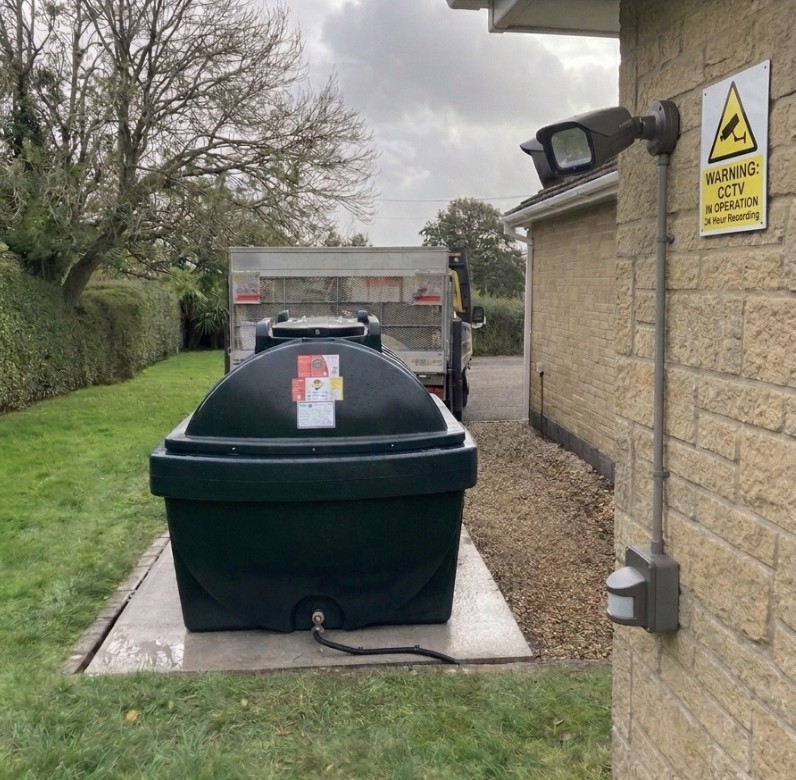
Even inexpensive visual deterrents are effective. A basic Wi‑Fi camera or video doorbell near the tank area alerts you to movement and records activity. Making cameras visible, along with low-cost signage such as “CCTV in operation” or “Property monitored,” further strengthens the deterrent.
Fuel theft is usually opportunistic. By keeping tanks out of sight and adding lighting, lockable caps, basic alarms, and visible security, you greatly reduce the likelihood of being targeted — all without major expense or structural changes.